Sourcing Industrial Parts from Turkey: A Complete B2B Buying Solution
Global supply chain disruptions, escalating container freight rates, and extended lead times from East Asia have forced procurement teams worldwide to restructure their vendor portfolios. In this shifting macroeconomic climate, sourcing industrial parts from turkey has transformed from an alternative contingency plan into an indispensable, core procurement strategy. Operating at the strategic crossroads of Europe, the Middle East, and Central Asia, the Turkish industrial ecosystem offers sophisticated manufacturing infrastructure, rapid logistics turnaround, and compliance with stringent international technical standards. For overseas enterprises navigating cross-border trade, building a dependable supplier pipeline requires an operational understanding of Turkey’s regional industrial hubs, sub-tier vendor dynamics, and technical quality benchmarks.
From an execution perspective, establishing a resilient procurement channel across the country involves far more than simply issuing a digital Request for Quotation (RFQ). Based on our direct operational experience across major Organized Industrial Zones (OSB), successful cross-border sourcing requires boots-on-the-ground technical vetting, precise contract manufacturing oversight, and strict containment of logistical bottlenecks. Sourcing high-precision components requires an end-to-end framework where material certifications, tooling tolerances, and supply agreements are managed proactively before production batches ever hit the factory floor.
The objective of this comprehensive guide is to provide engineering leads, global procurement directors, and supply chain managers with actionable, field-level guidance for procuring industrial components from Turkish manufacturers. Whether you are transitioning existing tooling from Asian facilities, seeking high-mix low-volume precision engineering, or looking to diversify your tier-one supplier base, understanding the operational mechanics of the Turkish industrial sector will ensure consistent quality, cost containment, and supply chain security.
What Industrial Parts Can You Source from Turkey?
The scope of precision manufactured goods accessible within Turkey covers practically every stage of the heavy industrial and light manufacturing spectrum. The country’s production landscape specializes in precision-machined assemblies, high-pressure die castings, fabricated structural weldments, hydraulic and pneumatic actuators, polymer and composite extrusions, and specialized transmission systems. Utilizing advanced multi-axis CNC milling, high-tonnage stamping presses, and automated induction heat treatment facilities, domestic factories consistently produce high-integrity machinery spare parts and mission-critical assemblies for global original equipment manufacturers (OEMs).
In practical supply operations, foreign buyers most frequently tap into the Turkish vendor ecosystem for medium-to-high complexity components that require rigorous material integrity. These include ductile iron castings (EN-GJS series), forging-grade carbon steel flanges, precision-turned shafts, high-tolerance aluminum extrusions (6000 and 7000 series alloys), and custom-molded elastomeric sealing elements. Rather than commodity hardware, the greatest comparative value lies in complex engineering components where tight dimensional tolerances (down to microns) and certified surface treatments (such as hard chrome plating, nitrocarburizing, or anodizing) are mandatory engineering requirements.
A common mistake made by initial buyers is assuming that all machine shops across industrial zones operate with the same baseline technical capabilities. While Turkey hosts thousands of manufacturing facilities, tooling capabilities, clean-room standards, and internal metallography testing capabilities vary significantly between tier-one export vendors and smaller jobbing shops. In practical application, matching the exact part specification with the correct manufacturing cluster—such as sourcing forged fluid-power components from Konya while placing precision aerospace-grade CNC turned parts in Ankara or Bursa—is essential to ensuring full drawing compliance.
Why Source Industrial Parts from Turkey for B2B Trade?
Engaging in B2B procurement Turkey initiatives gives international enterprises substantial operational and commercial advantages over traditional far-shore manufacturing destinations. Chief among these is geographical proximity and market access. Through the European Union–Turkey Customs Union and direct motorway connections, goods dispatched from Turkish manufacturing corridors can reach major Central European assembly lines in 3 to 6 business days via road freight. This drastic transit reduction allows procurement teams to implement lean, Just-in-Time (JIT) inventory systems, virtually eliminating the excessive safety stock and high working capital requirements associated with 30-to-45-day ocean voyages from Asia.
Beyond logistical speed, the structural integrity of Turkish industrial operations is deeply aligned with Western manufacturing disciplines. Decades of acting as primary tier-one and tier-two suppliers to leading European automotive, aerospace, and defense brands have embedded rigorous Quality Management Systems (QMS)—including ISO 9001, IATF 16949, and AS9100—across the manufacturing base. Turkish facilities routinely operate with European-standard raw materials and maintain complete traceability back to primary melt sources, providing international buyers with full material test reports (EN 10204 3.1 certification) and rigorous Production Part Approval Process (PPAP) documentation.
From a long-term supply chain risk management perspective, Turkey offers currency diversification and flexible minimum order quantities (MOQs). Unlike large-scale export operations in other regions that demand massive production runs to justify custom tooling, many established Turkish manufacturers are structured to handle high-mix, medium-volume production programs with rapid changeover capabilities. This agility is particularly advantageous for specialized machinery builders, aftermarket spare parts distributors, and industrial equipment developers who require iterative engineering modifications without incurring prohibitive tooling penalties.
Key Industries and Industrial Products Exported from Turkey
Turkey’s manufacturing output spans diverse, highly organized sectors that consistently supply critical goods to the international market. The heavy commercial vehicle, passenger automotive, agricultural machinery, white goods, and defense industries serve as the foundational pillars of the nation’s export economy. Consequently, Turkey export products encompass an extensive catalog of engineered assemblies, including commercial vehicle driveline systems, heavy earthmoving attachments, industrial heat exchangers, pressurized vessels, fluid handling valves, and custom automation robotics designed for high-throughput factory floors.
To understand where specific parts are produced, international procurement teams must understand Turkey’s regional manufacturing specializations:
- Marmara Region (Istanbul, Bursa, Kocaeli, Sakarya): Automotive systems, stamping dies, precision tooling, electronic control assemblies, commercial vehicle components, and high-precision sheet metal fabrication.
- Central Anatolia (Ankara, Konya, Eskişehir): Defense-grade precision machining, aerospace components, heavy agricultural machinery, planetary gearboxes, hydraulic cylinders, and power transmission parts.
- Aegean Region (İzmir, Manisa): Industrial casting, pump and valve manufacturing, structural steel fabrication, renewable energy equipment (wind turbine components), and precision electrical enclosures.
- Southern & Southeastern Anatolia (Gaziantep, Adana): Heavy industrial packaging parts, material handling equipment, structural metal assemblies, and plant maintenance components.
In our experience, a common misstep for overseas buyers is attempting to source cross-disciplinary product assemblies from a single sub-contractor without verifying their internal supply chain dependencies. For instance, a vendor manufacturing complex centrifugal pumps may excel at casting and CNC machining the pump housing, but rely on external sub-tier vendors for dynamic mechanical seals, impellers, or balancing operations. Conducting detailed audits of these secondary processes is critical to avoiding unexpected delivery delays or quality deviations in the final export batch.
Turkey Sourcing Agency empowers your brand to unlock the full potential of the Turkish market and international trade through comprehensive services including Product Sourcing, Logistics, Warehousing, Order Fulfilment, Quality Inspection, and Buying Services.
Machinery and Equipment Manufacturing in Turkey
The machinery building sector in Turkey is characterized by rapid technical modernization, heavy capital investment in multi-axis machining centers, and widespread adoption of Industry 4.0 production controls. Domestic machine builders supply complete manufacturing systems worldwide, including thermoforming machines, plastic injection molders, hydraulic press brakes, fiber laser cutting units, and automated food processing lines. As a direct consequence, the domestic supply ecosystem for internal machinery spare parts—such as high-torque drives, linear motion guides, hardened tool steel dies, and bespoke conveyor assemblies—is exceptionally robust and responsive.
When commissioning custom machinery parts or structural machinery frames, buyers benefit from Turkey’s advanced welding and non-destructive testing (NDT) standards. Fabricators routinely hold EN ISO 3834-2 welding quality certifications, with welders certified under EN ISO 9606-1. Components destined for high-stress cyclic loading undergo rigorous internal testing, including ultrasonic inspection (UT), magnetic particle testing (MT), and liquid penetrant inspection (PT), ensuring that heavy fabricated assemblies and base frames maintain absolute structural integrity under extreme operating environments.
However, when ordering custom industrial machinery components, buyers must explicitly define dimensional measurement protocols at the contract stage. A recurring issue in cross-border equipment procurement is ambiguous drawing notes regarding geometric dimensioning and tolerancing (GD&T) according to ISO 1101 standards versus local shop interpretation. Specifying Coordinate Measuring Machine (CMM) inspection reports for critical datums before dispatch eliminates assembly-line mismatches during final integration at your home facility.
Metal, Steel and Aluminum Parts from Turkish Manufacturers
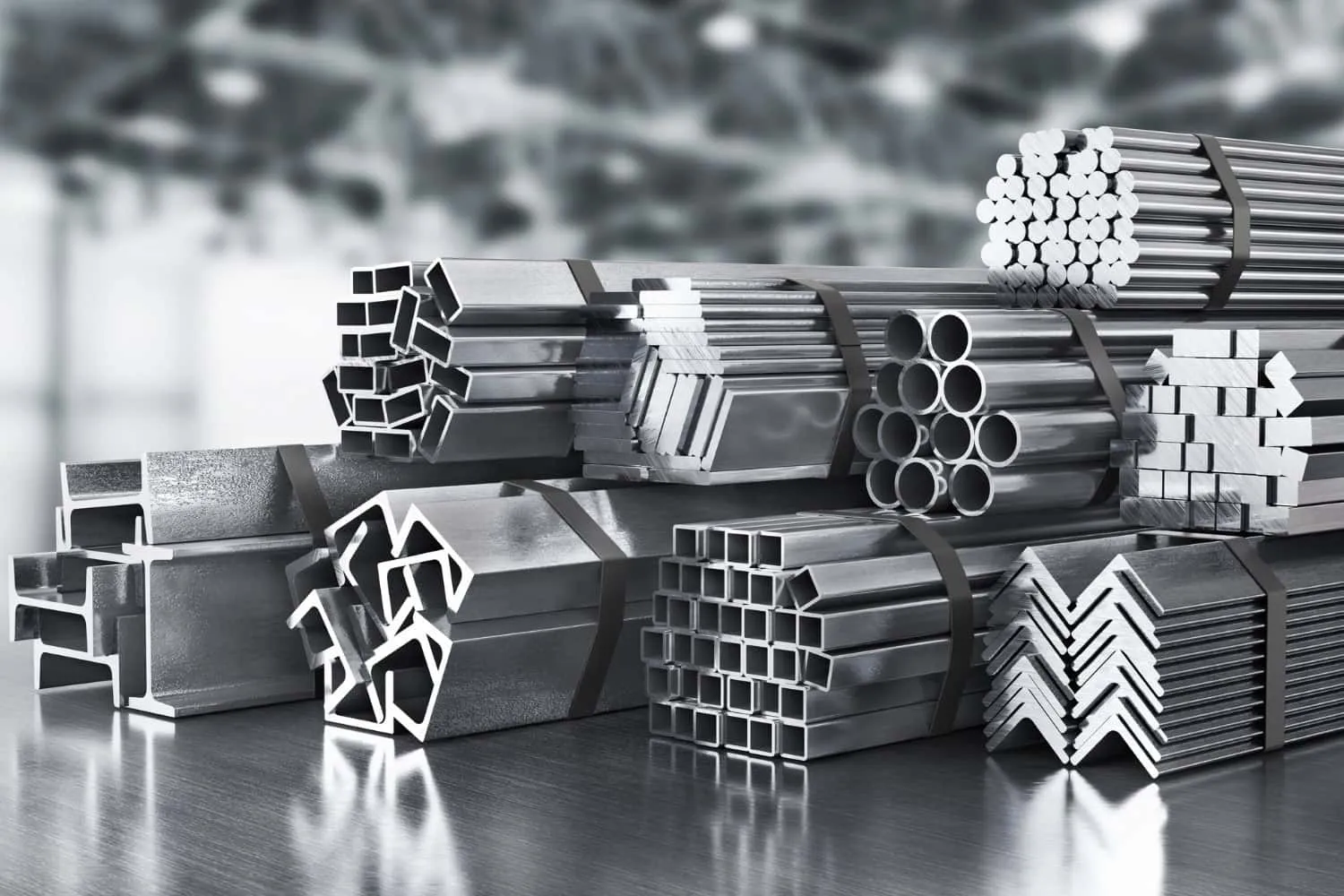
Turkey ranks as one of the world’s leading steel producers and maintains an advanced primary and secondary metal processing industry. For procurement professionals, this translates into immediate access to a comprehensive spectrum of raw materials, casting foundries, and extrusion plants without the markup or delays of importing billets and ingots. In the realm of metal parts manufacturing, Turkish enterprises excel in precision forging, investment casting, gravity die casting, progressive sheet stamping, and tight-tolerance CNC turning of both ferrous and non-ferrous alloys.
The aluminum fabrication sector is especially dynamic, with domestic extrusion mills producing complex architectural, thermal-break, and structural profiles using 6060, 6063, 6082, and 7075 alloys. These facilities are often fully integrated, featuring in-house tool and die design, automated extrusion lines, precision CNC post-machining, and advanced surface finishing such as QUALICOAT-approved powder coating or high-micron hard anodizing. In the steel sector, precision laser cutting, waterjet profiling, CNC bending, and robotic welding of high-strength steels (like Hardox wear plates and Strenx structural grades) are standard operational capabilities across Marmara and Central Anatolian workshops.
In actual operational practice, material verification represents the single most important risk checkpoint in metal parts procurement. Buyers must be vigilant regarding chemical composition limits, grain direction in rolled or forged components, and post-machining heat treatment cycles (such as quenching and tempering, case hardening, or stress relief annealing). Procuring from certified suppliers that provide full optical emission spectroscopy (OES) chemical analysis and tensile/Charpy impact test verification is necessary to guarantee that the delivered industrial parts sourcing shipment meets the exact mechanical properties demanded by the engineering design.
Automotive, Spare Parts and Engineering Components from Turkey
As one of the world’s major automotive manufacturing bases—producing passenger vehicles, buses, light commercial trucks, and heavy-duty trailers for global brands—Turkey possesses a mature, Tier-1 and Tier-2 automotive supply network. This engineering ecosystem produces an exhaustive array of steering systems, brake assemblies, suspension links, differential gears, cooling modules, engine valves, and elastomeric vibration dampening mounts. These components are manufactured under stringent statistical process controls (SPC) to achieve ultra-low defective parts per million (PPM) thresholds.
For commercial aftermarket buyers and industrial fleet operators, sourcing automotive-grade engineering components from Turkey bridges the gap between premium OEM build quality and cost-competitive replacement pricing. Turkish manufacturing facilities operate with extensive automated testing benches, performing continuous durability, salt-spray corrosion (ASTM B117), torsional fatigue, and burst pressure testing. This rigorous testing regimen ensures that aftermarket parts match the functional lifecycle and reliability of original equipment parts under demanding field conditions.
A critical nuance when sourcing automotive parts is verifying intellectual property rights and tooling ownership structures. High-volume automotive tier suppliers often run dedicated OEM production lines alongside open-market commercial lines. Procurement teams must clearly confirm whether specific tooling, patterns, and molds are proprietary to an OEM or available for private-label production. Working with established local engineering partners ensures that your private-label automotive and machinery components are manufactured using dedicated tooling with clear, legally protected ownership agreements.
How to Find Reliable Industrial Parts Suppliers in Turkey
Finding and qualifying genuine, high-capability Turkish industrial suppliers requires looking past superficial online directory listings. While major international trade fairs—such as WIN EURASIA in Istanbul or specialized casting and metalworking expos—provide good initial contact points, relying solely on high-level catalog claims often results in commercial misalignments. Real manufacturing capability can only be validated through direct, on-site technical audits that scrutinize equipment age, machine maintenance logs, quality control instruments, calibrated gauge availability, and operator skill levels.
When assessing potential production partners, procurement teams should evaluate suppliers against an objective qualification checklist:
- Manufacturing Equipment: Verify machine specifications, multi-axis capabilities, spindle hours, brand origins (such as DMG Mori, Mazak), and routine preventive maintenance logs.
- In-House Metrology: Inspect the quality room for temperature-controlled environments, calibrated CMMs, optical profile projectors, surface roughness testers, and portable spectrometers.
- Sub-Tier Transparency: Identify external surface treatment, coating, or heat treatment partners and evaluate their respective certifications and logistics turnarounds.
- Financial & Operational Stability: Check raw material inventory buffers, credit ratings, and workforce stability to avoid production line freezes during market fluctuations.
The most frequent operational mistake international businesses make is engaging in single-source procurement without having a physical audit presence within the country. Misunderstandings regarding technical delivery conditions (DIN/EN vs. ASTM standards), lead time assumptions, and packaging specifications for sea/road transit frequently arise when managed entirely over email. Bridging this operational divide requires boots-on-the-ground management that verifies factory floor realities against contractual commitments before advance payments are released.
Cost, Lead Time and Supply Chain Advantages of Sourcing from Turkey
Evaluating the economic case for procuring from Turkey extends beyond simple unit price calculations; it requires analyzing total cost of ownership (TCO). While direct production labor and machine hour rates in Turkey remain highly competitive compared to Western Europe and North America, the true financial advantage stems from compressed transit cycles, minimized pipeline inventory, and lower customs friction. Under the Customs Union with the European Union, industrial products manufactured in Turkey move with an A.TR movement certificate, entering the EU market free of customs duties, which instantly removes a substantial fiscal burden.
From an industrial supply chain management standpoint, lead time predictability is a major advantage. While far-shore manufacturing typically requires an 8-to-12-week total cycle time (including production queuing, port dwell, multi-week ocean voyages, and customs clearance backlogs), sourcing from Turkish manufacturing clusters typically reduces this timeline to 2 to 4 weeks for repeat production runs. This operational velocity allows businesses to respond dynamically to seasonal demand surges, eliminate expensive air freight expedites, and dramatically lower inventory holding costs.
Evaluating the core operational differences between sourcing models clearly illustrates this dynamic:
- Freight Transit to Europe/MENA: Far-Shore takes 30 to 45 Days via ocean freight, whereas Near-Shore Turkey takes 3 to 6 Days via road or Ro-Ro.
- Production Run Flexibility (MOQ): Far-Shore requires high, rigid container volumes, while Turkey accommodates medium to low, highly flexible batch sizes.
- Import Duty for EU Deliveries: Far-Shore incurs standard third-country tariffs, whereas Turkey benefits from 0% duty under the A.TR certificate.
- On-Site Factory Audits: Far-Shore involves substantial travel expenses and lead time, whereas Turkey allows rapid access and convenient travel.
- Working Capital in Transit: Far-Shore ties up 60 to 90 days of capital in the pipeline, compared to just 15 to 30 days when sourcing from Turkey.
Near-shoring your parts pipeline to Turkey optimizes total operational expenditure. The ability to place smaller, more frequent production batches directly decreases warehouse footprints and insulates your business against sudden global shipping container spikes.
Quality Inspection, Logistics and Warehousing for Turkish Industrial Sourcing
Ensuring flawless execution in cross-border component procurement depends on maintaining an uncompromised quality assurance and supply chain containment protocol. Even with certified factories, pre-shipment quality control is non-negotiable. An enterprise-grade inspection routine should incorporate first-article inspection (FAI), in-process dimensional audits using calibrated micrometers and thread gauges, surface roughness testing (Ra/Rz values), coating thickness measurements (via magnetic or eddy-current gauges), and final packaging integrity assessments to prevent transit corrosion (VCI packaging for metal parts).
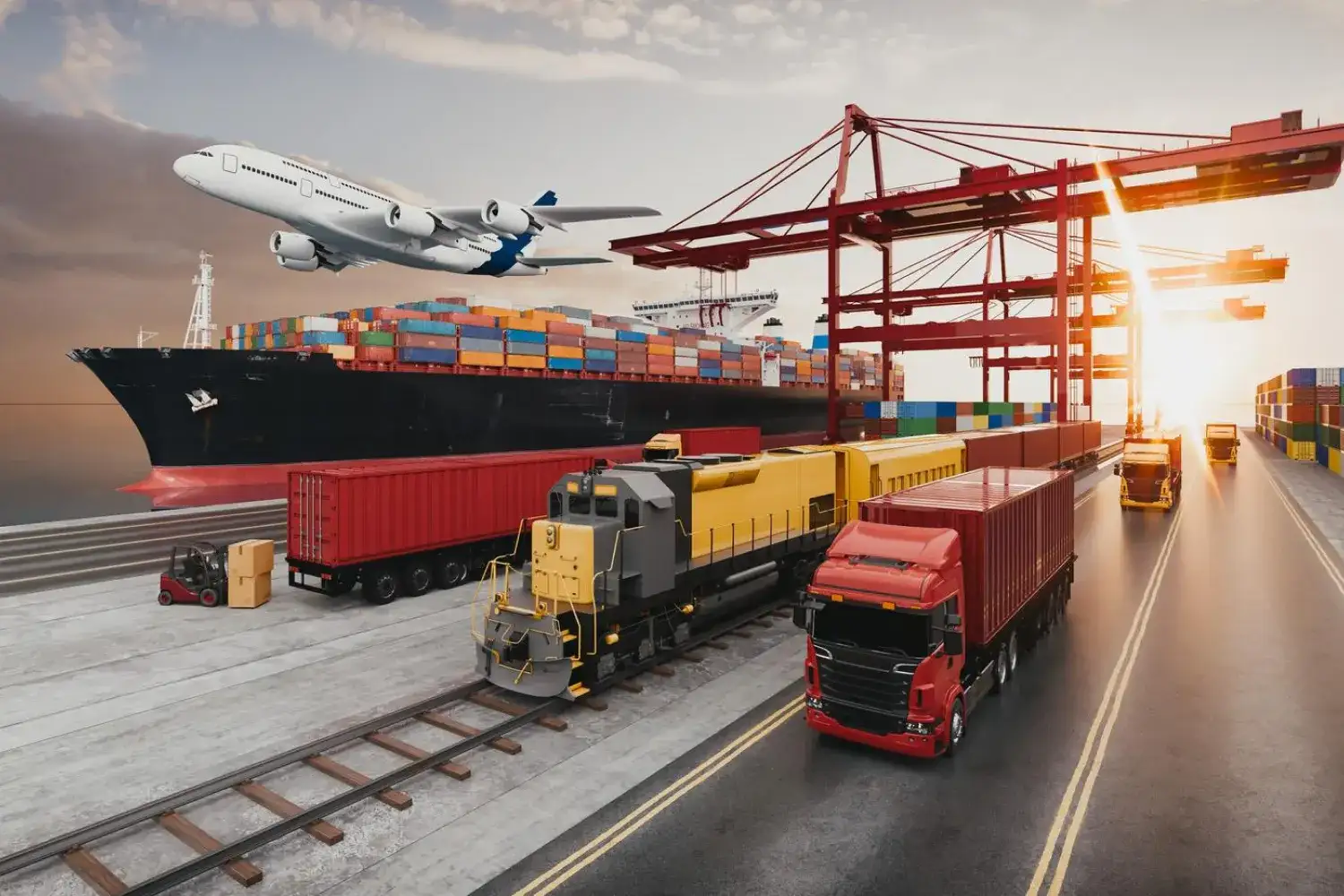
Logistical efficiency requires utilizing multimodal transport networks that balance transit speed and freight expenditures. Depending on the cargo profile, shipments can move via dedicated driver road freight, intermodal Ro-Ro (Roll-on/Roll-off) sea vessels connecting Turkish ports (such as Ambarlı, Pendik, İzmir, or Mersin) to European ports (like Trieste, Toulon, or Patras), or direct air freight for time-critical spare parts. Consolidating smaller LCL (Less than Container Load) production batches into centralized, secure warehousing facilities within Turkey before international export enables significant freight optimization and single-customs-declaration processing.
Managing these complex operations from abroad can stretch internal procurement teams thin, especially when handling multiple industrial vendors simultaneously. Operating through a unified infrastructure partner that provides dedicated Product Sourcing, secure domestic Warehousing, multi-carrier Logistics, and comprehensive Quality Inspection eliminates the operational risk of misaligned shipments, defective batches, and customs clearance delays.
Turkey Sourcing Agency: Your Complete B2B Industrial Parts Buying Solution
Navigating the Turkish industrial landscape requires local expertise, technical precision, and absolute commercial transparency. Turkey Sourcing Agency serves as your comprehensive on-the-ground partner, delivering an integrated, end-to-end B2B procurement framework designed specifically for international buyers, distributors, and OEMs. We eliminate the complexities of cross-border trade by managing every phase of your supply chain—from technical vendor matching and contract negotiation to quality assurance and multimodal delivery.
Our comprehensive operational capabilities cover the full procurement lifecycle:
- Product Sourcing: We identify, evaluate, and audit certified Turkish manufacturers capable of meeting your exact CAD drawings, GD&T tolerances, and material specifications.
- Buying Services & Procurement Management: We manage purchasing agreements, vendor terms, private-label manufacturing arrangements, and export compliance documentation on your behalf.
- Quality Inspection & Auditing: Our technical specialists perform on-site visual checks, precision dimensional measurements, and material testing oversight, collaborating directly with world-class accredited inspection bodies such as SGS and Bureau Veritas to ensure complete standard compliance before dispatch.
- Warehousing & Packaging: We provide secure warehousing, batch consolidation, custom export packaging, and VCI rust-prevention crating to protect precision machinery and metal components.
- Logistics & Freight Forwarding: Supported by an extensive international logistics network spanning 400 offices across 84 countries, we execute air, sea, road, and multimodal freight solutions for standard shipments, full container loads, breakbulk cargo, and oversized project machinery.
- Order Fulfillment: For direct-to-market or specialized delivery models, we handle end-to-end order processing and downstream distribution with accuracy and speed.
Whether you are seeking to reduce production costs, secure critical backup capacity for your assembly lines, or replace fragile overseas logistics routes with a dependable near-shore operation, Turkey Sourcing Agency provides the local infrastructure and technical rigor you need. Partner with us today to unlock the full potential of Turkey’s industrial manufacturing sector with absolute confidence and operational excellence.