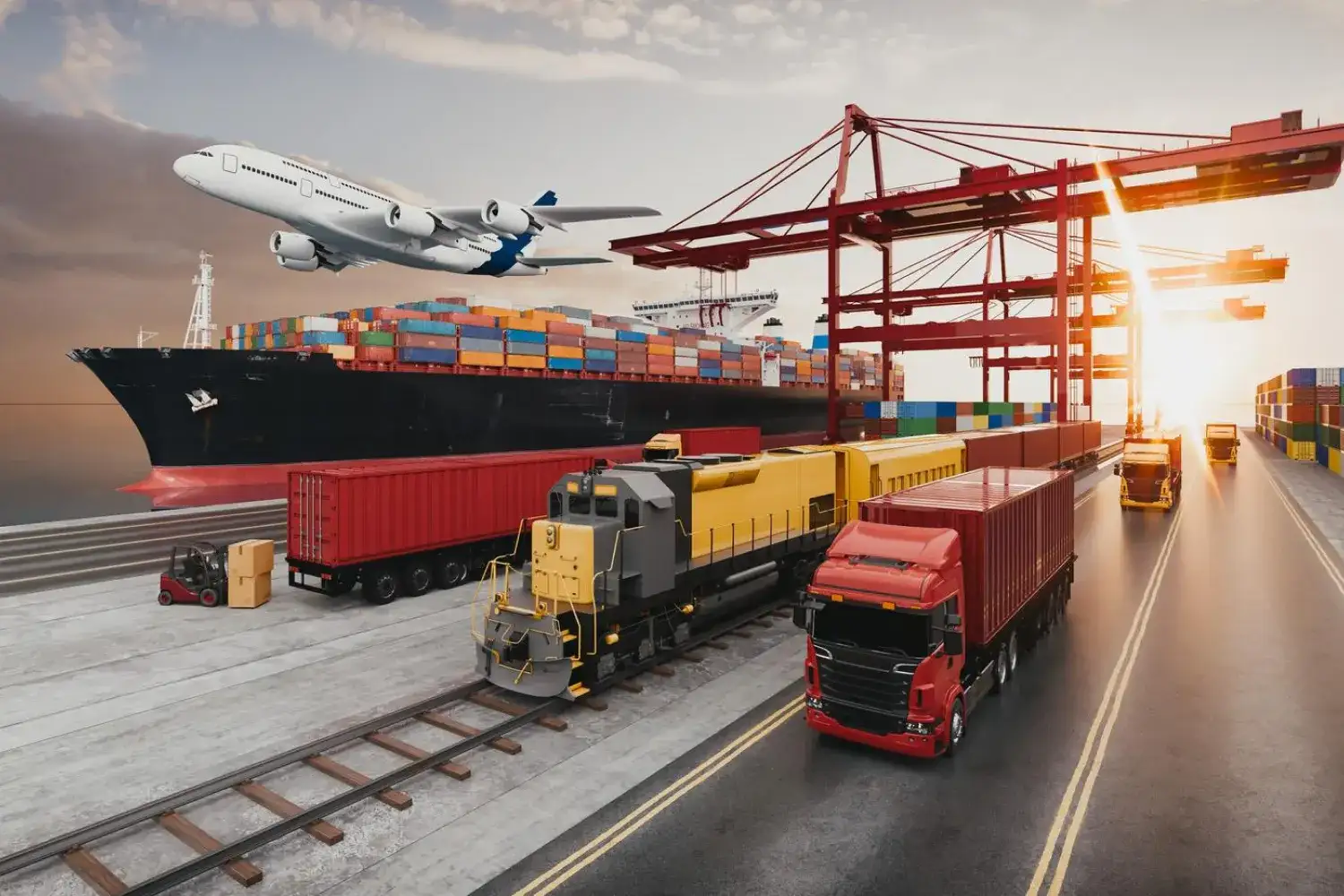
Cross-Border Logistics Solutions for Importing from Turkey
Navigating global supply chains requires robust cross-border logistics solutions that balance transit speed, freight expenditures, and regulatory compliance. When orchestrating an import from Turkey, businesses gain a strategic geographic edge, sitting directly at the crossroads of Europe, Central Asia, and the Middle East. However, converting this geographical proximity into actual bottom-line efficiency demands a structured approach to freight corridors, customs procedures, and multimodal routing. Relying on fragmented shipping arrangements often results in unexpected port demurrage, misallocated container space, and costly customs bottlenecks.
In our operational experience, the most common mistake importers make during their initial procurement cycles is treating freight booking as an isolated final step rather than integrating it directly with production schedules. In real-world applications, choosing between road freight (tir), ocean container lines (FCL/LCL via major hubs like Ambarlı, Gemlik, or Mersin), and air cargo depends heavily on the cargo’s volumetric weight and shelf-life sensitivity. For instance, European buyers frequently benefit from intermodal rail-road configurations that bypass highway toll bottlenecks, while North American buyers must carefully calculate terminal handling charges (THC) and vessel dwell times across Turkish ports.
To ensure seamless international trade, logistics execution must be reinforced by rigorous documentation—specifically accurate EUR.1 movement certificates, ATR certificates for European customs union lanes, and precise commercial invoices matching harmonized system (HS) codes. Practical risk mitigation requires implementing proactive tracking, contingency rerouting protocols, and comprehensive cargo insurance policies. When cross-border operations are coordinated under a unified framework, international buyers can eliminate hidden transshipment fees, streamline clearance workflows, and secure dependable delivery timelines directly to their distribution hubs.
What Products Can You Import from Turkey for Your Business?
The breadth of Turkey wholesale products spans advanced industrial equipment, high-grade architectural materials, FMCG, and premium consumer goods. International procurement managers often target Turkish manufacturing clusters because of their capacity to produce high-specification output under strict European standard alignments (such as CE, ISO, and OEKO-TEX certifications). From high-precision thermoforming machinery and automotive components in the Marmara basin to world-class home textiles in Denizli and commercial contract furniture in Bursa, the country offers diverse, high-volume production capabilities tailored to global enterprise standards.
In practice, businesses must differentiate between off-the-shelf catalog products and customized contract manufacturing. The most frequent error buyers encounter when sourcing items like private-label cosmetics, structural metal profiles, or packaging materials is failing to clearly define technical specifications, raw material tolerances, and tooling costs during the quotation phase. Real-world procurement demonstrates that Turkish industrial plants excel in medium-to-high complexity items where automated assembly lines combine with skilled technical craftsmanship, offering a compelling alternative to long-lead East Asian supply lines.
For businesses evaluating which categories yield the highest return on investment, the sweet spot generally lies in goods where freight volume-to-value ratios and lead times dictate profitability. Wholesalers and enterprise distributors seeking flexible minimum order quantities (MOQs) find Turkish producers highly capable of adapting production runs for custom dimensions, bespoke finishes, and specialized labeling without demanding the astronomical batch volumes standard in other manufacturing regions.
Why Import Products from Turkey? Key Advantages for International Buyers
Shifting global commerce patterns have pushed corporate purchasing departments to diversify and nearshore their operations, positioning the Turkish export market as a central pillar in resilient supply chain management. Turkey’s unique integration with the European Union Customs Union eliminates tariffs on industrial goods entering Europe, drastically reducing administrative friction. Beyond trade agreements, Turkey boasts modern production infrastructure, state-of-the-art manufacturing technologies, and a workforce experienced in meeting international technical benchmarks.
Based on our direct work with international buyers, the primary advantage over distant Asian suppliers is dramatic lead-time compression. While ocean transit from East Asia to Western Europe or the Americas can tie up working capital for 35 to 60 days, standard road transit from Istanbul or Izmir to major European hubs takes merely 4 to 8 days, and transatlantic container shipping routes remain direct and competitive. This velocity enables purchasing teams to adopt agile, lean inventory models, substantially lowering warehousing holding costs and mitigating the risks of dead-stock depreciation.
However, capitalizing on these benefits requires understanding local commercial dynamics. A frequent pitfall for foreign enterprises is assuming that competitive initial pricing guarantees uniform terms across all suppliers. In practical negotiations, advantageous payment terms (such as Cash Against Documents or tiered Letters of Credit) and reliable production slots are earned through structured communication and verified compliance checks. For brands needing rapid design-to-shelf turnarounds and stringent ESG compliance, sourcing from Turkish facilities delivers a decisive structural edge.
Turkey Sourcing Agency empowers your brand to unlock the full potential of the Turkish market and international trade through comprehensive services including Product Sourcing, Logistics, Warehousing, Order Fulfilment, Quality Inspection, and Buying Services.
Turkey’s Most Exported Products and Leading B2B Industries
Turkey’s export engine is anchored by several powerhouse industries that consistently supply international markets with critical B2B components and finished goods. Automotive parts, steel and metal fabrication, electrical machinery, apparel, and polymer plastics represent the backbone of national export volume. Industrial buyers across North America, Europe, and the MENA region actively leverage these established industrial clusters to secure stable, high-volume supply contracts that adhere to rigorous global engineering standards.
In real-world procurement scenarios, each industry cluster operates under distinct regional ecosystems. For example, technical textiles and apparel sourcing are concentrated in Istanbul, Bursa, and Gaziantep, where raw material availability and integrated dyehouses allow rapid prototyping. Conversely, heavy machinery, agricultural equipment, and sheet metal fabrication thrive in industrial zones across Ankara, Konya, and Kocaeli. Understanding these regional specializations is critical; attempting to source specialized industrial valves from a consumer goods hub, for instance, leads to inflated subcontractor markups and compromised technical oversight.
When navigating these core industries, international buyers must establish rigorous component-level benchmarks. The most common pitfall in industrial sourcing is evaluating a vendor purely on machine capacity without checking their raw material supply chains—such as whether a steel fabricator sources certified European-grade billets or domestic standard alloys. Buyers who thrive in the Turkish market map these supply sub-tiers thoroughly, ensuring full traceability from raw inputs to final crating.
How to Find Reliable Suppliers and Manufacturers in Turkey
Identifying genuine, tier-one Turkish manufacturers requires moving beyond basic internet directories, trade portals, and unverified broker listings. While digital marketplaces showcase thousands of potential contacts, a large percentage of online listings belong to middlemen, trading intermediaries, or under-equipped workshops lacking enterprise-grade export compliance. Conducting a successful supplier search involves cross-referencing industry registry databases, verifying Chamber of Industry records, and evaluating actual on-site manufacturing capacity.
In our practical field experience, the biggest mistake overseas procurement teams make is relying entirely on digital catalogs, polished websites, or virtual factory tours. A supplier may present a pristine online portfolio while actually outsourcing production to unvetted third-party subcontractors, leading to unpredictable quality deviations and uncontrolled lead times. Real-world verification demands direct vetting: auditing machinery maintenance logs, confirming workforce safety certifications, checking environmental management systems, and evaluating financial stability to prevent mid-production bankruptcies.
Effective supplier verification must follow a disciplined, milestone-based qualification protocol:
- Verification of official business registration, tax certificates, and export licensing via Turkish trade registries.
- Comprehensive review of technical quality management certifications (such as ISO 9001, IATF 16949, or GMP).
- Physical capacity audits to verify internal production machinery, automated assembly lines, and in-house laboratory testing facilities.
- Direct validation of banking references and trade references from previous international enterprise clients.
Product Sourcing from Turkey: Finding the Right Products and Suppliers
Successful B2B sourcing in Turkey is a structured methodology that bridges the gap between engineering specifications and commercial production realities. Finding the right production partner goes far beyond negotiating the initial unit cost per item. It involves evaluating an enterprise’s tooling capabilities, raw material sourcing stability, internal quality assurance procedures, and willingness to sign legally binding Non-Disclosure Agreements (NDAs) and bilingual manufacturing service contracts.
Based on industry practice, buyers frequently stumble during the Request for Quotation (RFQ) stage by submitting ambiguous technical packages. If tolerances, material grades, surface finishing, packaging drop-test ratings, and master carton dimensions are not specified down to precise metrics, factories will naturally bid using standard commercial grades. This creates costly friction later when production samples fail testing protocols. Experienced buyers draft exhaustive technical data sheets and require full pre-production “Golden Samples” before releasing raw material procurement deposits.
Turkey Sourcing Agency specializes in end-to-end Product Sourcing, providing foreign enterprises with direct, transparent access to top-tier factories while filtering out intermediate trading markups. By establishing direct communication protocols, overseeing sample revisions on the factory floor, and negotiating favorable commercial terms, purchasing teams can minimize risk and streamline the journey from initial technical drafting to full-scale commercial manufacturing.
Cost-Effective Logistics Solutions for Importing from Turkey
Designing a cost-effective freight strategy requires balancing container utilization, transportation modes, and port selection. Optimizing shipping costs from Turkey does not mean simply choosing the lowest nominal quotation from a freight forwarder; it means eliminating hidden demurrage, avoiding dead-freight charges, and selecting optimal incoterms. Utilizing strategic freight forwarding ensures that cargo moves efficiently through major gateways like Istanbul, Izmir, or Mersin while avoiding costly handling delays.
In real-world shipping applications, the selection of Incoterms drastically impacts total landed cost. Many foreign buyers default to CIF (Cost, Insurance, and Freight) or CFR terms, assuming it simplifies their operations, only to be hit with exorbitant destination port terminal charges arranged by the seller’s forwarder. Operating under FOB (Free on Board) or FCA (Free Carrier) terms gives the importer complete control over ocean and air freight rates, transit routing, and destination handling, preventing unwelcome invoice surcharges.
A cost-comparison breakdown of transport modes demonstrates distinct operational use cases:
- Ocean Freight (FCL/LCL): The most economical method for heavy, high-volume industrial goods and bulk commodities, providing direct container routes to global sea terminals.
- Road Freight (FTL/LTL): The gold standard for European distribution, offering door-to-door transit within 4 to 8 days, eliminating port dwell times, and lowering handling damage risks.
- Air Freight: Reserved for high-value, low-weight electronics, urgently needed replacement parts, or seasonal samples where market arrival speed outweighs the higher per-kilogram rate.
- Multimodal Rail/Road Solutions: Highly cost-efficient for central European destinations, insulating shippers from fluctuating highway fuel levies and road permit shortages.
Quality Inspection Services for Products Sourced from Turkey
Securing reliable product quality across international supply lines demands continuous, on-site quality assurance rather than reactive post-delivery assessments. Waiting for a container to arrive at your domestic warehouse before discovering dimensional variances, defective seams, or subpar packaging integrity is a catastrophic operational failure that results in lost sales and costly return logistics. Independent, systematic inspection protocols conducted at origin ensure that all shipments meet agreed purchase specifications before departure.
Practical experience shows that quality deviations most commonly occur due to raw material batch variations or rushed end-of-run assembly schedules. The most dangerous assumption an importer can make is believing that a perfect pre-production sample guarantees flawless mass output. In real production runs, machinery calibration can drift, sub-tier component suppliers might alter formulations, and packing staff may cut corners on pallet strapping or moisture protection, causing cargo degradation during long transit voyages.
To comprehensively mitigate these risks, Turkey Sourcing Agency delivers rigorous, multi-stage Quality Inspection protocols that oversee every phase of production:
- Initial Production Check (IPC): Validating the quality, grade, and specifications of incoming raw materials and tooling before mass assembly begins.
- During Production Inspection (DUPRO): Auditing the manufacturing line when 20% to 50% of the batch is completed to identify defects early and implement immediate corrective actions.
- Final Random Inspection (FRI) / Pre-Shipment Inspection (PSI): Performing statistical sampling based on ISO 2859-1 (AQL tables) on 100% produced and at least 80% packed goods, verifying aesthetics, dimensions, functional performance, and barcode readability.
- Container Loading Supervision (CLS): Monitoring the physical loading process at the factory or warehouse, ensuring correct carton counts, secure weight distribution, intact moisture desiccant placement, and proper container sealing.
Warehousing and Order Fulfillment Solutions for Turkish Imports
Modern international commerce increasingly relies on flexible storage and fulfillment infrastructures positioned close to production hubs. Establishing intermediate warehousing capabilities within Turkey allows global businesses to consolidate shipments from multiple regional manufacturers, conduct value-added labeling, repackage products into retail-ready cartons, and buffer against global shipping volatility. This consolidated staging prevents the expense of shipping multiple half-empty containers across international borders.
In practical fulfillment operations, the primary logistical hurdle for expanding brands is managing fragmented supplier timelines. When an enterprise sources metal frames from Bursa, cushions from Denizli, and retail packaging from Istanbul, coordinating direct synchronized shipping is virtually impossible. Utilizing a centralized consolidation warehouse allows buyers to collect regional shipments, perform secondary quality checks, palletize goods to exact domestic retail specifications, and export full, dense container loads that maximize freight spend efficiency.
Furthermore, for direct-to-consumer (D2C) and modern omnichannel retailers, utilizing local warehousing enables dynamic cross-border fulfillment. Instead of incurring domestic import duties and high local storage fees in target markets, inventory can be held in Turkish bonded or non-bonded facilities and dispatched via express air networks directly to the end customer upon order placement. This agile fulfillment model minimizes idle working capital, slashes domestic storage overhead, and drastically improves order-to-delivery speed.
How to Simplify B2B Buying and International Trade with Turkey
Managing an international supply chain involves navigating contract law, currency hedging, localized commercial negotiation styles, and cross-border payment risks. Successfully navigating trade with Turkish suppliers requires clear commercial protocols, transparent banking channels, and unambiguous dispute-resolution frameworks embedded into every purchase agreement. Streamlining these elements removes administrative friction and builds productive, long-term commercial relationships.
From our years of managing cross-border transactions, the most critical mistake international companies make is relying solely on simple Proforma Invoices (PI) rather than executing comprehensive, bilingual procurement contracts. A standard PI rarely covers force majeure parameters, exact defect rate allowances, delay penalties, intellectual property protections, or mandatory dispute arbitration venues. When production issues arise, foreign buyers operating without localized legal contracts find themselves with limited practical recourse.
To establish a secure, low-friction buying framework, enterprises should implement the following strategic steps:
- Formalize all commercial terms using detailed, enforceable purchase agreements that clearly detail product specifications, payment milestones, lead times, and liquidated damages for delays.
- Utilize secure international trade payment mechanisms, such as milestone-based Escrow, Confirmed Letters of Credit (LC), or progressive bank transfers tied directly to validated Quality Inspection reports.
- Establish clear Incoterms (such as FOB or FCA) from the initial quotation phase to eliminate ambiguities regarding freight liability, customs clearance, and export duty payments.
- Secure accurate export documentation early, ensuring all commercial invoices, packing lists, certificates of origin, and transport documents match customs requirements precisely.
Turkey Sourcing Agency: End-to-End Sourcing and Logistics Solutions
Executing successful procurement and distribution across the Turkish market demands on-the-ground operational capability, established local connections, and technical expertise. As a dedicated, full-service partner, Turkey Sourcing Agency bridges the operational divide for international enterprises, managing every stage of cross-border commerce from initial factory discovery to final-mile destination delivery. We eliminate the vulnerabilities of remote procurement by serving as your dedicated, local procurement and supply chain team in Turkey.
Our full suite of solutions includes:
- Product Sourcing: Pinpointing, auditing, and validating high-caliber production facilities matching your precise engineering requirements and cost targets.
- Buying Services: Managing complete procurement workflows, contract execution, vendor price negotiations, and full export compliance on your behalf.
- Quality Inspection: Deploying certified QA/QC engineers to production floors to perform IPC, DUPRO, and Pre-Shipment audits according to strict international AQL standards.
- Warehousing & Order Fulfillment: Providing secure regional storage, multi-vendor order consolidation, value-added packaging, and direct B2C/B2B fulfillment.
- Logistics & Freight Forwarding: Engineering optimized air, ocean, road, and multimodal freight solutions with complete customs management to ensure on-time, damage-free global delivery.
Partnering with an experienced, on-the-ground agency transforms the complexity of global procurement into a predictable, highly profitable operational advantage. Contact Turkey Sourcing Agency today to streamline your sourcing operations, secure your production lines, and scale your international trade with confidence.