Plastic Raw Material Manufacturers in Turkey: Sourcing Guide for Global Buyers
The global plastics and polymers industry has undergone rapid structural shifts over the past few years, forcing international procurement managers to rethink single-region supply strategies. As supply chain disruptions and escalating freight costs challenge conventional manufacturing hubs, global enterprises are turning toward established industrial centers with strong technical infrastructure. Turkey has positioned itself as one of the world’s most dynamic polymer processing hubs, supported by sophisticated plastic raw material manufacturers that cater directly to European, North American, Middle Eastern, and African markets. Navigating this vast landscape requires an empirical understanding of local compounding standards, petrochemical refinery outputs, trade mechanisms, and compliance frameworks.
Procuring industrial inputs from Turkish plastic manufacturers involves far more than simply finding low unit prices; it requires aligning specific Melt Flow Index (MFI) targets, tensile tolerances, and stabilization packages with verified manufacturing outputs. The domestic sector spans high-capacity state-linked petrochemical facilities, private compounding operations, and specialized masterbatch formulators. For international procurement managers, understanding how to evaluate virgin polymer streams, engineering compounds, and high-purity post-industrial recyclates is essential to building an agile and resilient procurement pipeline that delivers consistent performance across multi-cavity injection molding, film blowing, and industrial extrusion lines.
In practice, the most common oversight international buyers make is treating all regional converters as direct primary producers. Turkey functions as both a major synthesizer of select polymers and one of the world’s largest secondary polymer compounding hubs. Sourcing directly from reputable plastic raw material suppliers demands strict verification of technical data sheets (TDS), safety data sheets (SDS), batch-to-batch polymer dispersion consistency, and export certification. This guide delivers a comprehensive, practical breakdown of the Turkish plastics ecosystem to help procurement executives streamline vendor qualification, ensure regulatory compliance, and execute seamless B2B transactions.
Why Source Plastic Raw Materials from Manufacturers in Turkey?
The fundamental driver behind Turkey’s dominance in the global polymer market is its massive domestic processing capacity, modern conversion machinery, and highly integrated petrochemical industrial clusters. As one of the largest converters of plastics in Europe, Turkey maintains an extensive ecosystem of domestic producers, masterbatch specialists, and compounding engineers. Sourcing from plastic manufacturers in Turkey allows global buyers to tap into state-of-the-art European twin-screw compounding lines, automated pelletizing plants, and dedicated R&D laboratories without paying the inflated operational overhead typical of Western European facilities.
Another decisive factor is operational agility and customized formulation flexibility. While primary petrochemical monoliths in North America or East Asia enforce massive minimum order quantities (MOQs) and rigid lead times for custom grades, Turkish compounders excel in agile formulation adjustments. Whether your project requires custom UV-stabilized polypropylene compounds for outdoor furniture, talc-filled grades for automotive under-the-hood components, or anti-static additives for electronic packaging, Turkish compounders formulate, test, and ship pilot batches rapidly. In our operational experience, turnaround times from initial formulation sampling to full-container dispatch are often 40% to 60% faster than typical Asian trade lanes.
Furthermore, procurement risks are significantly mitigated by Turkey’s long-standing Customs Union agreement with the European Union, along with its comprehensive network of bilateral Free Trade Agreements across the UK, EFTA, Middle East, and North Africa. When purchasing through verified plastic suppliers in Turkey, European buyers benefit from zero-tariff trade under A.TR movement certificates, eliminating unexpected duty surcharges. For North American and global buyers, standard Generalized System of Preferences (GSP) documentation and EUR.1 movement certificates streamline customs clearance, making the total landed cost of Turkish polymers exceptionally competitive when factoring in container velocity and working capital preservation.
Turkey Sourcing Agency empowers your brand to unlock the full potential of the Turkish market and international trade through comprehensive services including Product Sourcing, Logistics, Warehousing, Order Fulfilment, Quality Inspection, and Buying Services.
What Types of Plastic Raw Materials Can Global Buyers Source from Turkey?
The product portfolio available from Turkish polymer producers encompasses the entire pyramid of synthetic resins, from high-volume commodity polyolefins to specialized, glass-fiber-reinforced engineering thermoplastics. Global procurement teams can source prime virgin resins, certified near-prime lots, advanced mineral-filled compounds, color masterbatches, functional additive packages, and high-purity recycled pellets. Because the Turkish industrial base serves demanding end-use industries like automotive OEMs (Fiat, Ford, Renault, Toyota plants located domestically), white goods (Arcelik, Vestel), and food-contact packaging, the quality spectrum of plastic raw materials produced locally meets rigorous international performance standards.
Commodity thermoplastics constitute the largest volume of export shipments. Buyers can readily access low-density polyethylene (LDPE), linear low-density polyethylene (LLDPE), high-density polyethylene (HDPE), polypropylene homopolymers (PPH), and polypropylene block/random copolymers (PPC/PPRC). In addition to polyolefins, the country produces significant volumes of rigid and flexible polyvinyl chloride (PVC) dry blends, suspension PVC resin (S-PVC), and expandable polystyrene (EPS) beads tailored for thermal insulation and protective packaging.
For technical applications, Turkish compounders process high-grade engineering polymers, including:
- Polyamides (PA6, PA66) with glass fiber, carbon fiber, and mineral reinforcement
- Polycarbonate (PC) and PC/ABS blends optimized for impact and thermal stability
- Polybutylene Terephthalate (PBT) and Polyoxymethylene (POM / Polyacetal)
- Thermoplastic Elastomers (TPE, TPU, TPV) covering hardness ranges from 20 Shore A to 60 Shore D
- Masterbatches: High-opacity white (up to 75% TiO2 content), carbon black, custom RAL/Pantone colorants, and specialized additives (slip, anti-block, UV absorbers, flame retardants)
- Circular polymers: GRS-certified (Global Recycled Standard) post-consumer (PCR) and post-industrial (PIR) rPE, rPP, and rPET pellets
Popular Plastic Resins and Polymers Manufactured and Supplied in Turkey
A deep dive into regional production reveals clear centers of excellence across specific polymer families. Polypropylene remains the cornerstone of the domestic converting and compounding sector. Local polymer suppliers in Turkey provide homopolymers with melt flow rates ranging from 0.3 g/10 min for heavy-duty thermoforming sheets up to 45 g/10 min for high-speed thin-wall injection molding. The random copolymers (PPRC) produced in the country are globally recognized for manufacturing high-pressure hot and cold water piping systems, meeting strict hygiene and hydrostatic pressure requirements under DIN 8077/8078 standards.
Polyethylene grades represent another major supply category. High-density polyethylene (HDPE) is widely produced and compounded for blow molding (UN-certified chemical drums, detergent bottles), film extrusion (shopping bags, agricultural geomembranes), and pipe extrusion (PE100 pressure pipes for potable water and natural gas distribution networks). Linear low-density polyethylene (LLDPE) butane and octene grades supplied by regional compounders are engineered specifically for cast stretch films, heavy-duty shipping sacks, and rotational molding applications such as large industrial storage tanks.
Engineering polymers and specialized technical resins represent the highest value-add segment within Turkey’s polymer supply matrix. Specialized plastic resin suppliers in industrial zones such as Gebze, Bursa, and Izmir specialize in compounded Polyamides (PA6, PA66) compounded with up to 50% short or long glass fibers, impact modifiers, and halogen-free flame retardant (HFFR) packages. The table below illustrates the primary resin families, standard processing specifications, and typical industrial end-uses sourced by international buyers:
| Polymer Family | Common Grades / Melt Flow Index (MFI) | Key Additives & Modifications | Primary Industrial End-Uses |
| Polypropylene (PP) | Homo (MFI: 2–35) / Block Copo / Random Copo | Talc (10–40%), EPDM impact modifiers, UV stabilizers | Automotive bumpers, battery cases, PPR pipes, housewares |
| High-Density Polyethylene (HDPE) | Blow grade (MFI: 0.2–0.4) / Pipe PE100 / Injection (MFI: 4–12) | Carbon black masterbatch, processing aids | Water/gas distribution pipes, industrial IBCs, crates |
| Low-Density Polyethylene (LDPE/LLDPE) | Film grade (MFI: 0.3–4.0) / Rotomolding (MFI: 4.0–6.0) | Anti-block, slip additives, anti-oxidants | Agricultural greenhouse film, stretch wrap, water tanks |
| Polyamides (PA6 / PA66) | Viscosity: Medium/High | 15–50% Glass fiber, flame retardants (V0/UL94), heat stabilizers | Automotive under-the-hood parts, power tool housings, electrical connectors |
| Thermoplastic Elastomers (TPE/TPV) | Hardness: 25 Shore A to 60 Shore D | Crosslinked EPDM/PP blends, UV/Ozone packages | Window profiles, automotive weatherstrips, tool grips |
Key Plastic Products and Raw Materials Exported from Turkey
The export footprint of the Turkish plastics sector covers both raw resin granulates and high-precision semi-finished technical forms. As global manufacturers strive to secure reliable upstream inputs, plastic raw material exporters in Turkey ship thousands of twenty-foot and forty-foot dry containers monthly to major ports in Antwerp, Rotterdam, Hamburg, Felixstowe, Genoa, Houston, and Alexandria. The export volume is heavily weighted toward optimized compounding granules that converters can feed directly into injection presses, blown film towers, or profile extruders without requiring supplementary on-site blending.
Among raw resin forms, colored and functional plastic granules suppliers represent a significant export share. Rather than importing base virgin resins and attempting in-house color matching, international converters import ready-to-mold pre-colored compounds that comply with tight Delta-E color tolerances. Furthermore, flame-retardant cable compounds (HFFR/LSZH) designed for building infrastructure and renewable energy installations (solar photovoltaic cabling) have seen immense export growth due to rigorous European CPR (Construction Products Regulation) compliance.
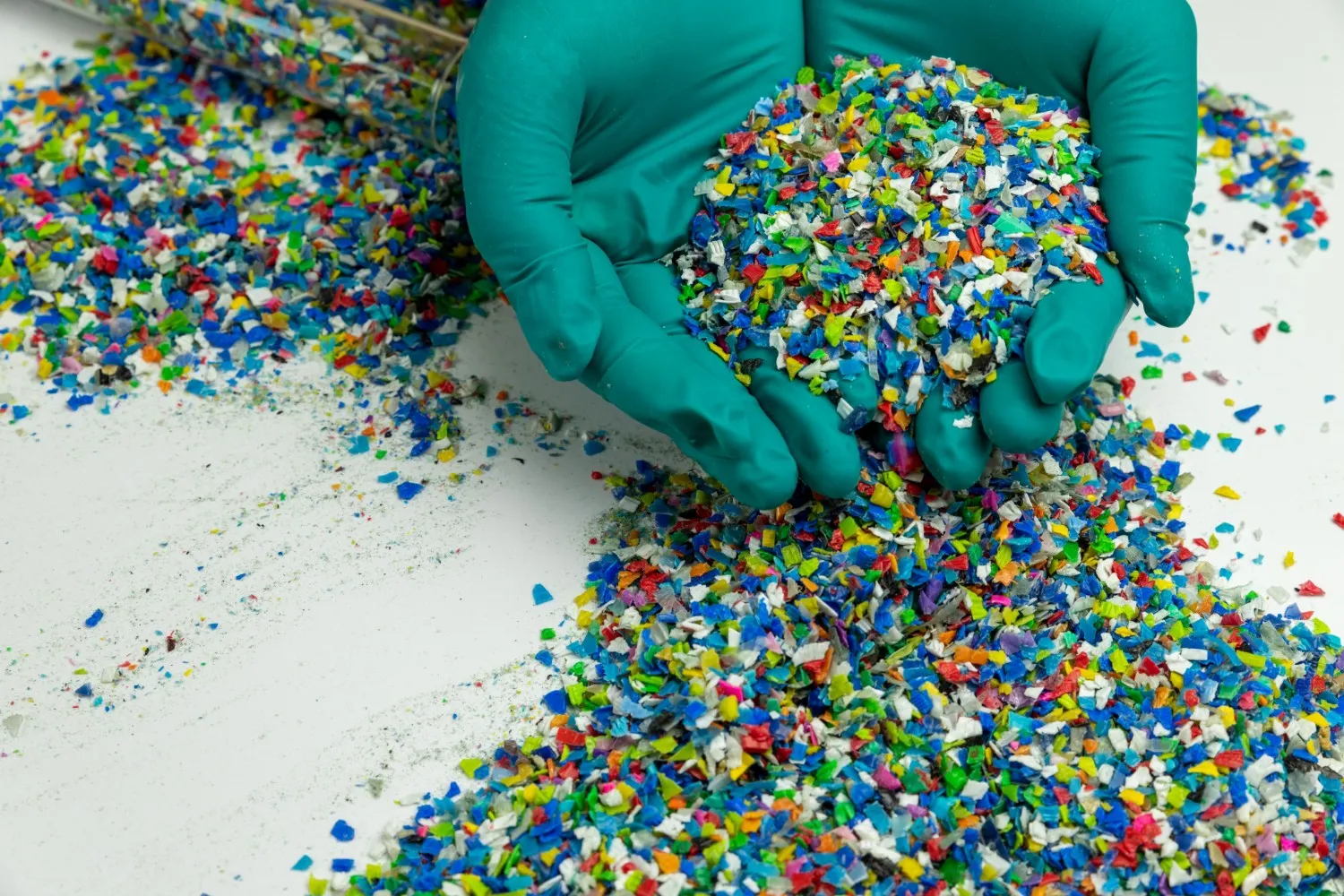
Beyond unformed pellets, Turkey is a major exporter of secondary raw materials and intermediate engineering stock shapes. High-purity recycled rPET flakes and food-grade decontamination-pellets (EFSA and FDA approved) are exported to international beverage bottling and thermoformed packaging enterprises. Concurrently, semi-finished plastic materials—such as cast acrylic sheets, solid polycarbonate panels, extruded POM-C and PA6 engineering rods, and bi-axially oriented polypropylene (BOPP) barrier films—are continuously exported to global machinery fabricators and commercial printing conglomerates looking for European-standard mechanical properties at viable price levels.
Advantages of Buying Plastic Raw Materials from Turkish Manufacturers
The commercial and technical advantages of procuring polymers from Turkish plastic manufacturers extend across product quality, pricing dynamics, production agility, and supply chain visibility. In contrast to multi-tiered trading setups where end-buyers are separated from compounding engineers by multiple intermediary brokers, dealing with established Turkish compounders provides direct visibility into polymer synthesis, base resin sourcing, and quality control methodologies. This direct relationship eliminates hidden markups and accelerates the technical resolution of field issues during mold trials.
A fundamental economic benefit is raw material cost optimization achieved through strategic compounding. Advanced compounding plants in Turkey leverage high-calcium carbonate (CaCO3) masterbatches and ultrafine precipitated barium sulfate fillers sourced from rich domestic mineral reserves. By incorporating high-grade, coated micronized mineral fillers into virgin polypropylene or polyethylene matrices, Turkish compounders produce cost-effective, high-rigidity compounds that significantly lower resin costs per part while maintaining dimensional stability and reducing cooling cycle times during molding operations.
To evaluate whether sourcing from Turkey matches your operational model, consider the following comparison between procurement channels:
- Turkish Manufacturers & Compounding Plants:
- Order Flexibility: Moderate to low MOQs (typically 1 to 5 metric tons per custom color or formulation).
- Lead Times: Rapid production cycles (5 to 14 business days from formulation approval to port loading).
- Technical Customization: High; willingness to tailor MFI, IZOD impact strength, heat deflection temperature (HDT), and custom coloring.
- Logistical Velocity: Short transit times (3 to 8 days by road/short-sea to Europe; 15 to 22 days by sea freight to North America).
- Best Suited For: Medium-to-large converters, automotive tier-suppliers, appliance manufacturers, and distributors requiring customized engineering grades, low lead times, and flexible batch volumes.
- Primary Mega-Refineries (East Asia / US Gulf / Middle East):
- Order Flexibility: High MOQs (typically 50 to 500 metric tons per single prime standard grade).
- Lead Times: Extended production queues and rigid shipping schedules (30 to 60+ days).
- Technical Customization: Minimal; fixed catalog prime grades without specialized tailor-made additive packages.
- Logistical Velocity: Long deep-sea transit times (35 to 55 days), subject to canal bottlenecks and container rate volatility.
- Best Suited For: Mass-commodity processors (e.g., standard film extrusion or disposable cutlery) running uniform standard grades at maximum container volumes where lead time is non-critical.
Turkey’s Strategic Location for Global Plastic Raw Material Sourcing
Geographic proximity to key markets is one of the most powerful strategic assets Turkey offers international supply chain managers. Situated at the intersection of Europe, Asia, and the Middle East, the country serves as a natural logistics springboard. While procuring polymer granules from East Asian production hubs often requires 40 to 60 days of ocean transit—exposing buyers to massive price fluctuations while inventory is locked in transit—shipments from Turkish ports reach southern European hubs in as little as 3 to 5 days, and central/northern European destinations within 6 to 10 days via multimodal transport routes.
This strategic proximity drastically reduces working capital requirements and minimizes supply chain vulnerabilities. International buyers can operate with lean, just-in-time (JIT) warehouse models rather than holding months of safety stock to cushion against maritime disruptions. Turkish deep-water container ports—including Ambarlı and Marport in Istanbul, Asyaport in Tekirdağ, Gemport in Gemlik/Bursa, and the Port of Mersin on the Mediterranean coast—maintain daily liner services operated by major global shipping lines such as MSC, Maersk, CMA CGM, and Hapag-Lloyd.
For European buyers, the availability of comprehensive roll-on/roll-off (Ro-Ro) vessel networks connecting Turkish ports (Pendik, Yalova, Çeşme, Mersin) directly to Trieste and Bari in Italy, Toulon in France, and Patras in Greece provides an uninterrupted intermodal landbridge. Polymer granules loaded into curtain-sided mega-trailers or 45-foot pallet-wide high-cube containers in industrial centers like Gebze, Gaziantep, or Kayseri can reach manufacturing plants across Germany, France, or Poland within a single business week, completely bypassing deep-sea container congestion.
How to Find Reliable Plastic Raw Material Manufacturers and Suppliers in Turkey
Finding and qualifying dependable plastic raw material suppliers in Turkey requires a disciplined, structured methodology. While industry trade fairs such as Plast Eurasia Istanbul provide an initial macro-overview of the market, identifying the right compounding partner requires deep technical vetting. Sourcing managers must distinguish between basic commercial stockists (traders who maintain fluctuating inventories of prime and off-grade lots) and established primary compounders who operate accredited testing laboratories, maintain clean twin-screw extruders, and offer lot-traceable production guarantees.
When vetting potential plastic material suppliers, your initial evaluation must center on technical testing infrastructure and traceability protocols. A dependable compounder should possess in-house testing equipment to verify density (ISO 1183), Melt Volume-Flow Rate (ISO 1133), tensile modulus (ISO 527), Charpy/Izod notched impact strength (ISO 179/180), and Ash Content (ISO 3451) for filled formulations. Our direct market experience shows that buyers who request comprehensive, stamped Technical Data Sheets (TDS) and batch certificates of analysis (CoA) alongside pre-shipment counter-samples prevent 95% of subsequent mold-filling and dimensional shrinkage disputes.
A systematic supplier qualification protocol should follow these practical steps:
- Initial Screening & Verification: Verify the company’s official trade registry, production license (Kapasite Raporu), and operating history to ensure they operate actual processing lines rather than acting strictly as unregulated brokers.
- Regulatory & Quality Audit: Confirm ISO 9001 (Quality Management), ISO 14001 (Environmental Management), and, where applicable, IATF 16949 (Automotive Quality) certifications. For food-contact grades, demand explicit European Framework Regulation (EC) No 1935/2004 and FDA 21 CFR compliance declarations.
- Pilot Sampling & Lab Analysis: Request 25 kg production-representative sample bags rather than hand-mixed lab pellets. Conduct independent lab verification of MFI, moisture content, and dispersion before issuing commercial tooling approvals.
- On-Site Factory & Capacity Audit: Perform an audit of the compounding facility. Inspect resin storage silos, gravimetric dosing systems, screen-changing mechanisms, and post-pelletizing homogenization silos to ensure uniform batch blending.
- Commercial & Payment Structuring: Establish transparent commercial terms under Incoterms 2020 (FOB, CIF, or DAP), stipulating clear pass/fail criteria tied directly to the Certificate of Analysis (CoA) parameters prior to balance payment release.
Quality Standards and Inspection for Plastic Raw Materials in Turkey
Ensuring batch-to-batch consistency in polymer sourcing requires rigorous quality control and technical compliance verification. The performance of plastic raw materials during high-speed molding operations is highly sensitive to minor deviations in moisture absorption, thermal degradation, and filler dispersion. When sourcing from Turkish plastic manufacturers, international buyers should enforce strict pre-dispatch inspection protocols that test physical, thermal, and mechanical parameters against baseline technical specifications before cargo leaves the factory floor.
The most common quality failure encountered in recycled and filled polymer sourcing is moisture contamination and un-melted gels resulting from worn extruder screws or inadequate degassing. For engineering polymers such as PA6, PA66, PBT, and PC, excessive moisture causes severe hydrolytic degradation during processing, leading to splay marks, brittleness, and mechanical part failure. Inspection protocols must incorporate precise Karl Fischer titration (or high-precision moisture balance testing) to verify that moisture levels remain strictly within technical limits (e.g., <0.15% for standard polyamides, <0.02% for polycarbonates) prior to packing into aluminum moisture-barrier bags.
For high-volume export shipments, buyers should insist on standardized testing regimes aligned with international standards:
- Melt Flow Rate (MFR / MFI): Verified under ISO 1133 or ASTM D1238 at specified temperatures and load weights (e.g., 230°C / 2.16 kg for PP; 190°C / 2.16 kg for PE) to guarantee uniform viscosity across molding cavities.
- Density & Specific Gravity: Tested via ISO 1183 to detect unauthorized filler variations or resin contamination.
- Ash Content (Filler Percentage): Conducted under ISO 3451 by burning polymer matrices in muffle furnaces at 600°C to verify accurate loading of talc, calcium carbonate, or glass fibers.
- Differential Scanning Calorimetry (DSC): Conducted under ISO 11357 to determine melting points, crystallization behavior, and detect unauthorized cross-polymer blending (such as PE contamination in recycled PP streams).
- Hazardous Substances & Compliance: Verification of compliance with EU REACH (Regulation (EC) No 1907/2006) for Substances of Very High Concern (SVHC) and RoHS directives, ensuring heavy metals (Lead, Cadmium, Mercury, Hexavalent Chromium) are absent from color masterbatches.
Plastic Raw Material Sourcing, Logistics and Order Fulfilment from Turkey
Managing the operational supply chain for polymer granules requires integrated management of factory scheduling, packaging integrity, specialized multimodal transport, and customs documentation. Polymer pellets are typically packaged in 25 kg multi-layer polyethylene or valve-paper bags stacked on heat-treated, fumigated ISPM-15 wooden or plastic pallets (standard 1,000 kg to 1,375 kg pallet loads), wrapped in heavy-duty stretch hooding. For large-scale industrial converters, goods can be dispatched in 1,000 kg to 1,250 kg polypropylene Big Bags (FIBCs) with moisture-proof liners, or loaded in bulk via specialized pneumatic tipping silo-trucks and 40-foot silo containers.
Logistical execution must balance freight cost against transit speed. Containerized ocean freight (FCL) remains the primary shipping method for long-distance export to the Americas, Africa, and East Asia, utilizing standard 20-foot dry containers (holding approximately 16.5 to 18 metric tons on pallets, or 21 to 22 tons loose-loaded/bulk-bagged) or 40-foot high-cube containers (holding 24 to 27 metric tons depending on road weight regulations at destination). For European buyers, dedicated full-truckload (FTL) and less-than-truckload (LTL) road freight provides factory-to-door transit within days, eliminating port drayage delays and container demurrage risks.
Executing end-to-end B2B trade successfully requires seamless coordination between Product Sourcing, multimodal Logistics, and regional Warehousing strategies. When international buyers purchase polymer grades from multiple regional compounding specialists (for example, sourcing black masterbatch from Istanbul, flame-retardant PA66 from Bursa, and PPRC pipe resin from Izmir), setting up local consolidation hubs allows all lots to be inspected, palletized, and combined into a single unified export container. This consolidated approach optimizes freight utilization, minimizes clearance documentation fees, and ensures centralized quality oversight before final departure.
How Turkey Sourcing Agency Helps Global Buyers Source Plastic Raw Materials from Turkey
Navigating the extensive ecosystem of plastic raw material manufacturers across Turkey demands local market intelligence, hands-on technical auditing, and reliable operational oversight. Turkey Sourcing Agency acts as your dedicated on-the-ground procurement partner, bridging the gap between international engineering standards and Turkish manufacturing capabilities. Our multi-disciplinary team handles the complete procurement cycle—eliminating language barriers, commercial opacity, and technical misunderstandings to deliver a fully transparent, dependable supply line for your polymer operations.
Our core strength lies in providing comprehensive, end-to-end procurement solutions tailored to industrial buyers. Through our specialized Buying Services, we negotiate directly with primary compounders and polymer producers to secure optimal contract pricing, volume tiering, and credit mechanisms. We conduct rigorous factory audits, oversee laboratory counter-testing, and execute stringent Quality Inspection protocols—dispatching field inspectors to sample stockpiles, inspect packaging integrity, verify moisture barrier seals, and oversee lab testing at accredited institutions such as SGS and Bureau Veritas prior to cargo dispatch.
From single-container spot orders to long-term OEM supply contracts, Turkey Sourcing Agency manages the critical path of your international trade operations. We coordinate complex logistics networks—spanning multimodal road transport, ocean container booking, bonded warehousing, and rapid export-import customs clearance—while supporting modern B2B models with specialized Order Fulfillment infrastructure. Partnering with Turkey Sourcing Agency empowers your organization to leverage the full manufacturing strength of Turkey’s polymer sector with complete commercial security, exceptional quality guarantees, and industry-leading supply chain velocity.